Quick Answer
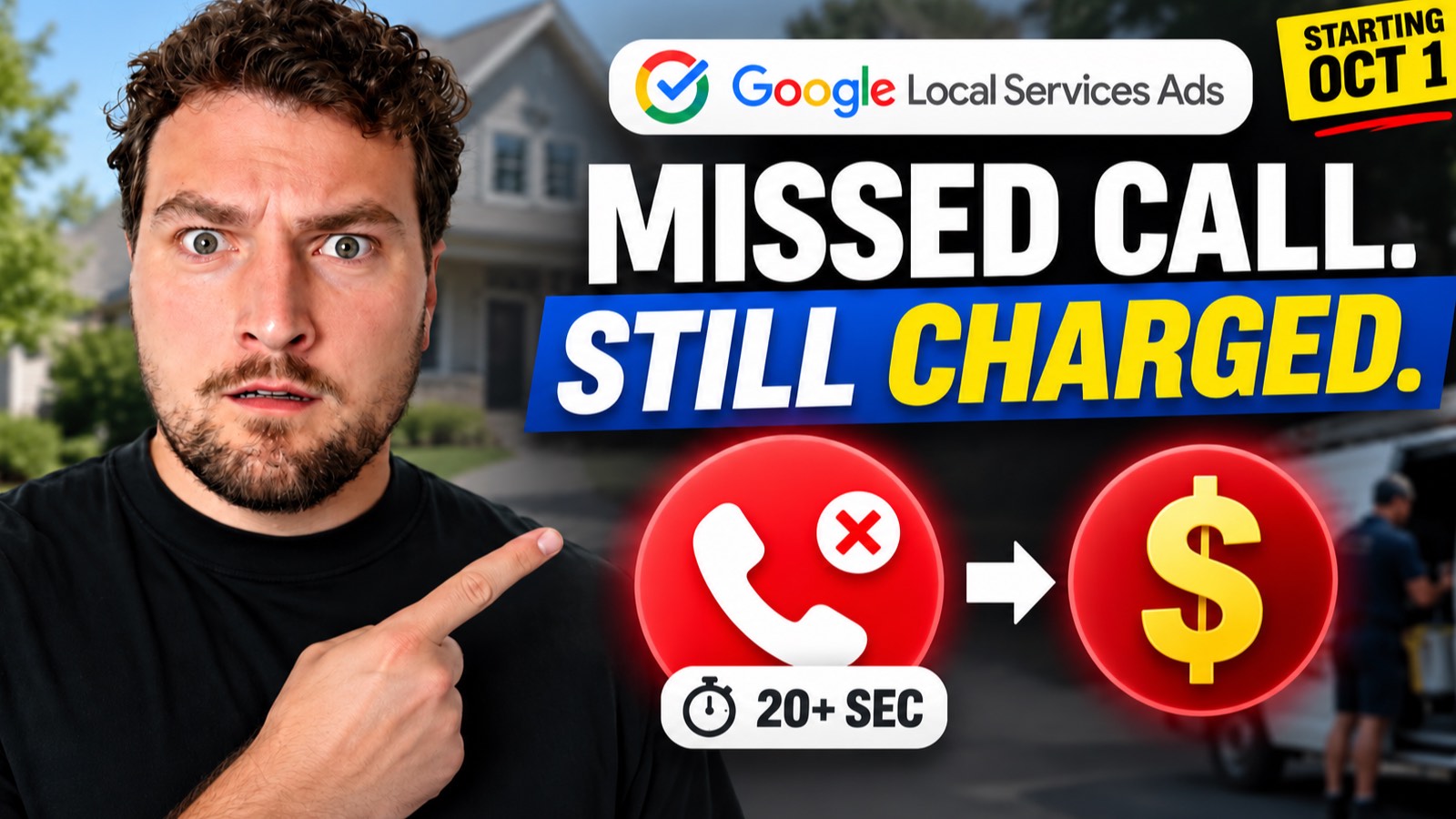
tl;dr: Starting October 1, 2026, Google can charge you for an LSA call that came in during your listed business hours and stayed connected for more than 20 seconds, even if nobody on your team picked up. Follow-up calls from the same customer can be charged separately. The one real exception is a phone menu that requires a keypress, since the timer starts after the caller presses a key. To protect your budget, find out your current answer rate, set up a missed-call safety net, and shorten your phone menu.
If you run Local Services Ads, Google just changed a rule that can quietly eat into your budget.
Starting October 1, 2026, some calls you never even answer will show up on your bill as paid leads.
Until now, most contractors assumed a call that rang out or went to voicemail wasn’t costing them anything. That assumption is about to be wrong. Google sent LSA advertisers a notice spelling out exactly when a missed call counts as a valid, chargeable lead, and it comes down almost entirely to how fast your business answers the phone.
The fix is simple. Skipping it isn’t. It’s worth ten minutes of your attention before October 1.
Watch the video below for a quick walkthrough of Google’s actual email, or keep reading for the full breakdown.
What’s Changing With Google LSA Call Charges on October 1, 2026
Google is widening its definition of a chargeable call lead on Local Services Ads. Two mechanics change, plus one existing exception now matters more than it used to.
Missed calls now count as billable leads
Starting October 1, any call that comes in during your stated business hours and stays on the line for more than 20 seconds can be charged as a valid lead. Even if no one on your team ever picks up.
That includes a call that just rings out. It also includes a call where the caller leaves a voicemail, as long as the total call length crosses 20 seconds.
Follow-up calls can trigger a second charge
Say a caller hangs up after five seconds. That first call wouldn’t qualify as a charged lead. But if a follow-up call happens later between your business and that same customer, and it meets Google’s valid-lead criteria, it still gets charged.
A short first call doesn’t protect you if a second call from the same person later qualifies.
The exception for phone menus (IVR)
If your call-receiving setup requires customers to press a key to reach the right department, a standard IVR, the 20-second timer doesn’t start until the caller presses that key. If they never press one, you don’t get charged for that call.
That’s genuinely useful protection, but it only helps if the menu itself is short. A long, confusing IVR can burn past 20 seconds on its own before anyone reaches a person. Google’s timer doesn’t care why the call ran long.
Why Google Is Making This Change
Google’s own explanation is straightforward. People using Local Services Ads usually have an immediate need, and they want to connect quickly with a business that can actually help. Google says the update is meant to keep the platform meeting that expectation while rewarding businesses that respond well.
Read plainly, that means Google is rewarding fast, responsive businesses. And it’s quietly charging the ones that let calls ring out.
What This Means for Your LSA Budget
Local Services Ads already runs on a pay-per-lead model rather than pay-per-click, so every chargeable lead has a real cost attached to it. Lead prices vary a lot by trade and market.
The math is simple even without a calculator. If your business only answers, say, half of its incoming LSA calls in real time, you’re now paying for leads on the calls you win plus a growing share of the ones you don’t. That’s not a hypothetical. It’s a direct line-item cost that shows up the same way a booked job does, except with nothing to show for it.
For a broader primer on how LSA pricing and ranking work beyond this specific change, start with the three types of Google LSA leads.
How to Protect Your Business Before October 1
None of this requires a big overhaul. It comes down to three things.
1. Know your current answer rate
If you don’t already know what percentage of your LSA calls your business actually picks up, find out before you do anything else. Check your LSA dashboard for calls that ring 20-plus seconds without an answer.
That number is the exact size of your exposure once the new policy takes effect. It’s worth knowing before October 1 rather than after your first surprise charge.
2. Set up a missed-call safety net
Whatever your team can’t pick up in real time needs somewhere to go instead of just ringing out. That could be a dedicated staff member, an answering service, or an automated option like missed-call text-back. Missed-call text-back automatically texts the caller within a minute or two, references their voicemail if they left one, and starts qualifying them while the lead is still warm.
The specific tool matters less than having something in place. What matters is that a ringing phone never just ends in silence.
It’s also worth looking at how fast your business responds to LSA leads in general, since Google already factors response speed into your ad ranking on top of this new charging rule. This guide to automating Google LSA message replies shows how to respond to message leads quickly while a human can still take over the conversation any time.
For the missed-call side specifically, AI missed-call text-back covers how to make the first reply useful instead of generic.
3. Clean up your phone menu (IVR)
If you use a phone menu, walk through it yourself like a first-time caller. If it takes pressing one key, listening to a message, pressing another key, and listening to another message before reaching a real option, that alone can eat past 20 seconds. With nobody ever picking up on the other end.
A clean, short menu that gets a caller routed in one or two steps protects you far better. It also gets real customers to a person faster, which is the whole point.
None of this is complicated to fix. Make sure a real call gets answered fast, or followed up on fast when it isn’t. After October 1, Google charges you either way.
Frequently Asked Questions
When does Google's new Local Services Ads missed-call charging policy take effect?
The policy takes effect October 1, 2026. From that date, qualifying missed calls and follow-up calls on Local Services Ads can be charged as valid leads.
Will Google LSA charge me if my business does not answer the phone?
Potentially. A missed call that comes in during the business hours listed on your Local Services Ads profile can qualify as a charged lead if the caller stays on the line for more than 20 seconds, even if no one picks up.
What counts as business hours under Google's LSA missed-call policy?
The policy refers to the hours listed on your Local Services Ads profile. If those hours do not match when your team can actually answer, review and correct them before the policy takes effect.
When does Google's 20-second missed-call timer start?
For a standard call route, the notice says the threshold is more than 20 seconds. If the caller must press a key in a phone menu to continue, the timer starts after that keypress. A caller who never presses a key is not charged under that exception.
Can Google LSA charge more than once for calls from the same customer?
Not for the same call, but a later follow-up call can be charged if the original call did not qualify and the later call meets Google's valid-lead criteria.
How can I reduce Google LSA missed-call charges?
First, measure how often LSA calls go unanswered. Then make sure your listed hours match staffed coverage, put a fast missed-call follow-up in place, and simplify any phone menu so callers reach the right person without a long delay.
Want more practical breakdowns like this?
If this kind of breakdown is useful, I send one of these every week. Join the newsletter and I'll walk you through the next one.